How Lighting Affects Material Finishes in Interior Design
Learn how lighting affects material finishes in interior design, from marble and wood to metal, glass, fabrics, and textured surfaces. Explore why lighting consultancy matters in luxury UAE interiors.
May 14, 2026

Material selection is one of the most important parts of interior design. Designers and architects spend significant time choosing marble, wood, stone, metal, glass, fabrics, paint finishes, wall textures, joinery laminates, and decorative surfaces because every finish contributes to the final atmosphere of a space.
But materials do not exist in isolation.
They are experienced through light.
The same marble slab can look warm and luxurious under one lighting condition and cold or overly reflective under another. A timber wall can feel rich and textured with the right grazing light, or flat and lifeless under uniform downlighting. A metallic detail can feel refined when softly highlighted, or harsh when exposed to uncontrolled glare.
This is why lighting and material finishes must be designed together.
In high end interior projects across Dubai and the UAE, where material palettes often include polished stone, reflective metals, textured walls, glass partitions, custom joinery, and premium fabrics, lighting has a direct impact on whether the final space feels refined or compromised.
Why Materials Change Under Different Lighting
Every material interacts with light differently.
Some materials absorb light. Some reflect it. Some scatter it. Some reveal texture only when light hits them from a certain angle. Others become uncomfortable when the wrong fixture, beam angle, or colour temperature is used.
This means that lighting is not simply about visibility. It is about interpretation.
A lighting consultant studies how light behaves on each finish and ensures the final lighting design supports the intended mood, texture, and visual hierarchy of the space.
If lighting is not planned around materials, even expensive finishes can look wrong once installed.
Colour Temperature and Material Appearance
Colour temperature plays a major role in how interior finishes are perceived.
Warm lighting can make wood, bronze, beige stone, leather, and textured fabrics feel richer and more inviting. Cooler lighting can enhance clean white surfaces, contemporary finishes, and some minimalist interiors, but it can also make warm materials look washed out or clinical.
In luxury interiors, the wrong colour temperature can distort the entire material palette.
A warm marble may lose its softness under overly cool lighting. A dark timber finish may feel heavy if the lighting is too warm and underpowered. A neutral wall finish may shift visually depending on whether it is lit at 2700K, 3000K, or 4000K.
This is why colour temperature should not be selected generically. It should be calibrated around the actual materials used in the project.
A lighting specification consultant considers how each finish responds to colour temperature before finalising the lighting strategy.
Colour Rendering and the Accuracy of Finishes
Colour rendering is another important factor in material perception.
A fixture may produce the right colour temperature but still fail to reveal colours accurately if its colour rendering quality is poor.
This matters especially in luxury interiors where subtle differences in stone veining, fabric tones, wood grains, artwork, and decorative surfaces are part of the design value.
Poor colour rendering can make finishes look dull, inaccurate, or inconsistent across the space. High quality lighting helps materials appear closer to how they were selected and approved during the design process.
For architects, developers, and interior teams, this is critical. Clients approve material palettes based on samples, renders, and moodboards. The lighting design must help the built result match those expectations.
Marble and Stone Finishes
Marble and natural stone are common in luxury residential, hospitality, and retail interiors across Dubai and the UAE.
These materials can look exceptional under the right lighting, but they are also easy to compromise.
Polished marble reflects light strongly. If fixtures are placed incorrectly, the surface may create glare, hotspots, or uncomfortable reflections. Textured stone requires a different approach. It often benefits from directional lighting that reveals depth, grain, and surface variation.
The challenge is to highlight the quality of the stone without overpowering it.
A strong beam placed at the wrong angle can flatten veining or create harsh reflections. A softer, more controlled beam can reveal the natural character of the material.
Lighting consultants evaluate beam angles, fixture placement, surface reflectance, and glare risk to ensure marble and stone finishes look refined rather than visually noisy.
Wood and Joinery Finishes
Wood responds beautifully to lighting when handled correctly.
Timber surfaces rely on warmth, grain, and texture. Good lighting can enhance these qualities and make a space feel calm, premium, and welcoming.
However, poor lighting can make wood look dull, overly yellow, or inconsistent.
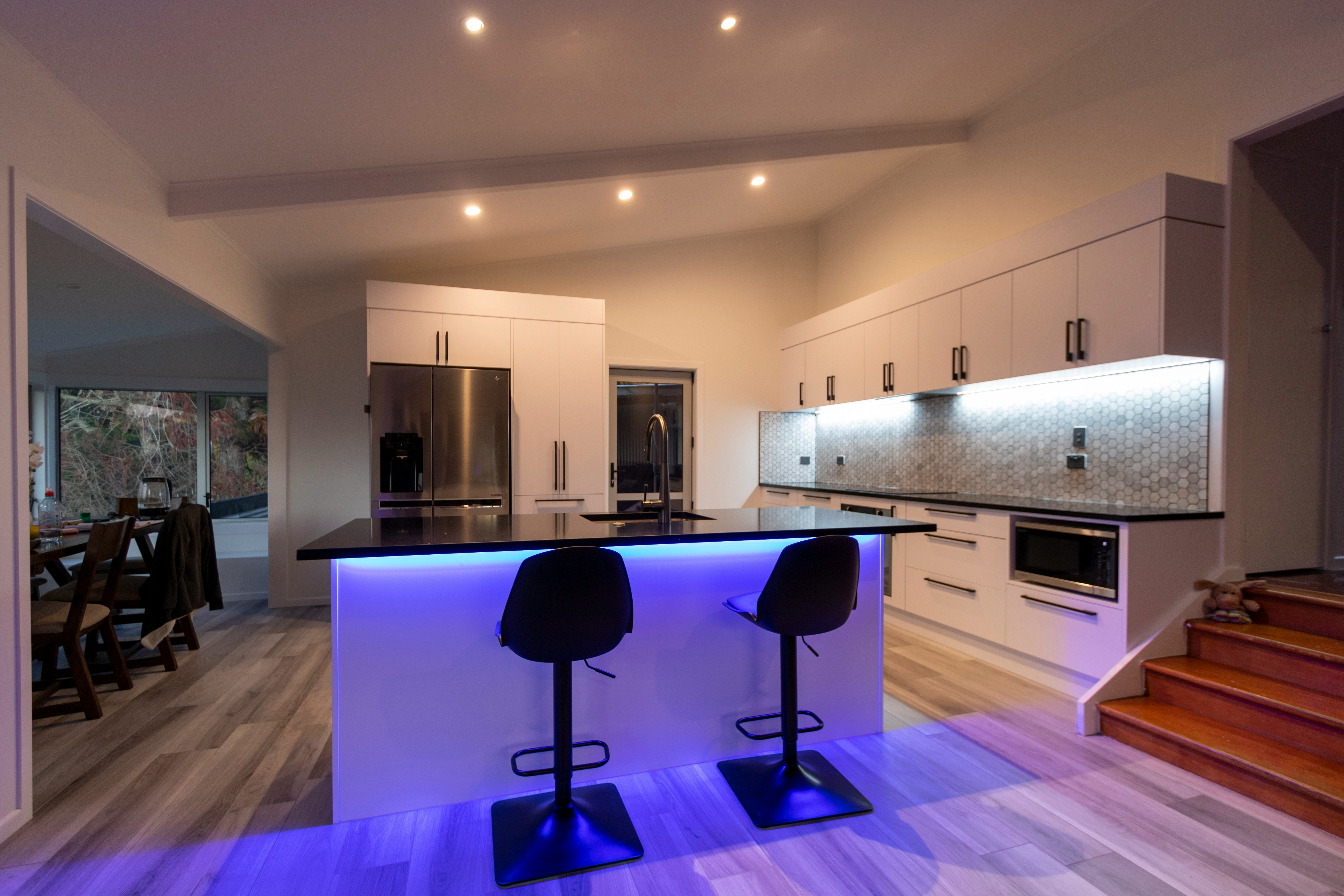
Joinery lighting is especially important. Wardrobes, shelves, wall panels, display units, bars, kitchens, vanities, and feature walls often require integrated lighting. If this is not coordinated early, visible light strips, uneven lines, shadow gaps, or inaccessible drivers can reduce the quality of the final installation.
Lighting for joinery must be planned with the joinery detail itself. It cannot be added as an afterthought.
This is where lighting drawings, section coordination, driver planning, and careful fixture selection become essential.
Metal Finishes
Metal finishes such as brass, bronze, stainless steel, brushed nickel, black metal, and polished chrome are often used in luxury interiors.
These finishes can add elegance and contrast, but they are highly sensitive to light.
Polished metals can create sharp reflections and glare. Brushed metals can look sophisticated when softly lit, but uneven lighting can exaggerate imperfections or make the finish appear patchy.
The goal is to control reflection rather than eliminate it.
A lighting consultant considers fixture position, beam spread, and viewing angles so metal details feel intentional and refined. This is particularly important in hospitality spaces, luxury villas, retail boutiques, and premium residential interiors where metal accents are often part of the overall design language.
Glass and Reflective Surfaces
Glass is one of the most challenging materials to light.
It reflects, transmits, and sometimes distorts light depending on its finish and placement. Clear glass, tinted glass, mirrors, glossy panels, and back painted surfaces all behave differently.
In interiors with large windows, mirrors, display cases, or glazed partitions, uncontrolled lighting can create unwanted reflections and visual discomfort.
This is especially relevant in UAE projects, where strong daylight already creates high contrast conditions. Artificial lighting must be carefully balanced so that reflective surfaces do not become distracting at night or uncomfortable during the day.
Glare control, beam positioning, and fixture shielding are critical in these environments.
Fabrics, Textures, and Soft Finishes
Fabrics and textured finishes depend on shadow and softness.
Wall coverings, curtains, upholstery, rugs, acoustic panels, leather, and textured plaster can all look dramatically different depending on how they are lit.
Flat frontal lighting may reduce texture. Directional lighting can reveal depth. Excessive brightness can make soft finishes feel harsh. Poor colour rendering can change fabric tones.
Luxury interiors often rely on these subtle textures to create warmth and depth. Lighting should support that intention.
A well planned lighting strategy ensures that soft materials feel tactile and layered rather than flat.
Paint Finishes and Wall Surfaces
Paint is often treated as simple, but lighting can change how paint colour appears throughout the day.
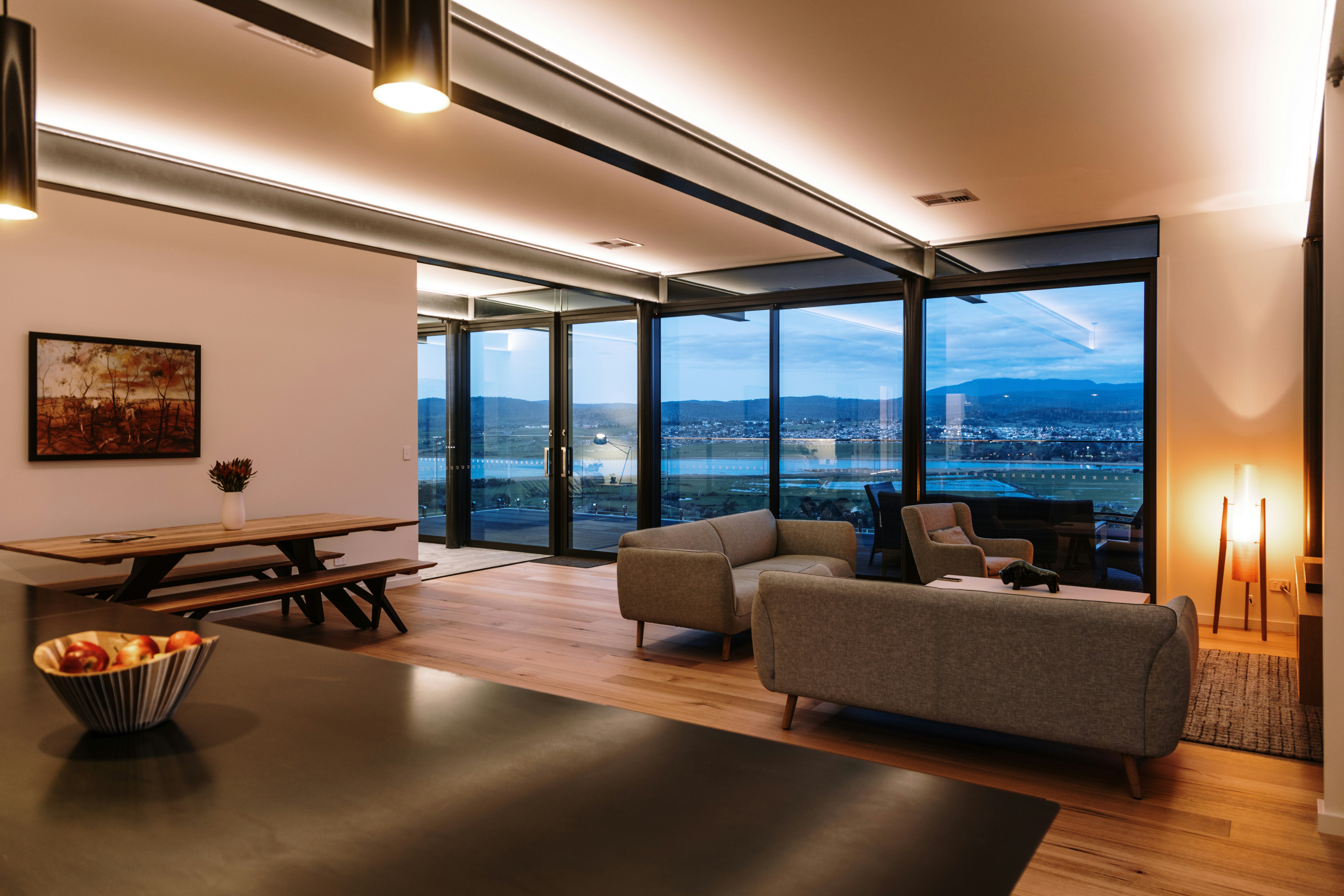
The same wall colour may look different under natural daylight, warm evening lighting, accent lighting, or indirect cove lighting.
Matte paints absorb light and soften spaces. Glossy finishes reflect more light and can reveal imperfections. Textured wall finishes can look rich when grazed correctly, but uneven if lit from the wrong distance or angle.
This is why lighting should be reviewed alongside paint samples and wall finish mockups, especially in luxury projects where subtle tonal differences matter.
Why Lighting Should Be Planned With the Material Palette
Lighting decisions should be made after understanding the material palette, not separately from it.
A material board tells only part of the story. The real test is how those finishes behave under the lighting conditions that will exist in the completed space.
In a luxury villa, hotel lobby, restaurant, or retail environment, the lighting strategy should respond to the finishes selected. If the project includes warm stone, textured plaster, bronze accents, and natural wood, the lighting approach should differ from a project built around white marble, glass, stainless steel, and minimalist surfaces.
This is why lighting design should be part of the interior design process early, before ceilings, joinery, automation systems, and fixture specifications are locked.
UAE Context: Why Material Lighting Matters More in Dubai Interiors
Dubai and the wider UAE have a unique design environment.
Luxury interiors often feature high contrast material palettes, large glazed openings, reflective finishes, double height spaces, statement staircases, custom joinery, and premium decorative surfaces. These details require careful lighting coordination.
Strong natural daylight also affects how interiors are experienced. A space that looks balanced during the day may feel flat or overly bright at night if artificial lighting is not properly layered.
Compliance requirements from utility authorities such as DEWA in Dubai, alongside sustainability frameworks like LEED and Estidama, also encourage efficient lighting strategies that are validated early.
Lighting can account for 15 to 20 percent of a commercial building’s electricity use, making it a meaningful component of energy strategy and sustainability compliance. While residential and hospitality usage patterns vary, the principle remains the same. Lighting should be planned carefully because it affects both visual quality and long term performance.
Common Problems When Lighting and Materials Are Not Coordinated
When lighting is not planned around materials, several problems appear during installation or handover.
Marble may reflect glare. Wood may look dull. Metal may feel harsh. Glass may create distracting reflections. Fabrics may lose texture. Wall finishes may appear patchy. Joinery lighting may show visible dots or uneven lines.
These issues are not always caused by poor material selection. Often, they are caused by lighting that was not designed around the material behaviour.
Corrections at construction stage can be expensive because they may require fixture changes, ceiling modifications, rewiring, or joinery adjustments.
This is why early lighting consultancy protects the material investment.
The Role of a Lighting Consultant
A lighting consultant ensures that the lighting strategy supports the material palette and design intent.
This includes reviewing finishes, understanding surface reflectance, selecting suitable colour temperature, controlling glare, planning beam angles, coordinating with joinery, validating lux levels, and preparing technical documentation for execution.
Simulation tools such as DIALux and Relux can also help assess lighting performance before construction begins. While simulations do not replace design judgement, they provide useful validation for lux levels, beam spread, and spatial balance.
An architectural lighting consultant in the UAE helps project teams avoid assumptions and ensure that materials look as intended in the final built environment.
Nakashi’s AuraSync Approach to Lighting and Materials
Nakashi approaches lighting as an architectural discipline rather than a product decision.
Developed through more than 14 years of lighting industry experience across the UAE, the AuraSync framework helps architects, developers, and project teams coordinate lighting with materials, interiors, and technical systems before the project reaches site.
AuraSync is structured around different levels of project involvement.
Refine supports projects that already have a lighting layout but require technical validation before installation. This is useful when the project team needs to review glare, beam angles, lux levels, driver placement, and specification alignment before execution.
Studio supports projects during the design stage, where lighting hierarchy, ambience, joinery lighting, simulations, and documentation still need to be developed. This is often the ideal stage for projects where material finishes are central to the design outcome.
Complete supports projects requiring end to end lighting consultancy from early concept through construction coordination and final commissioning. This level is suitable for projects where lighting, materials, automation, and final ambience must be protected across every stage.
Consultancy fees are scoped per project based on scale, complexity, and depth of involvement, allowing project teams to plan lighting investment early in the design phase.
This structured approach ensures that lighting is not treated separately from materials. It is planned, validated, coordinated, and protected throughout the project lifecycle.
Final Thoughts
Materials define the visual language of an interior, but lighting determines how that language is experienced.
A finish is never seen on its own. It is always seen through light.
That is why lighting design should be considered alongside the material palette, not after it. The right lighting can make marble feel elegant, wood feel warm, metal feel refined, glass feel controlled, and fabrics feel rich and tactile.
For luxury interiors in Dubai and across the UAE, lighting consultancy helps protect the material investment by ensuring every finish is shown at its best.
Ready to Make Your Materials Look the Way They Were Intended
Nakashi’s AuraSync lighting consultancy supports architects, developers, and project teams through a structured lighting design process that protects material quality, ambience, and design intent.
Explore AuraSync or contact the Nakashi team to discuss your project.
FAQs
How does lighting affect material finishes in interior design
Lighting affects how materials appear by changing their colour, texture, reflectance, and depth. The same material can look warm, cold, flat, glossy, rich, or harsh depending on colour temperature, beam angle, glare control, and fixture quality.
What colour temperature is best for interior materials
There is no single best colour temperature for all materials. Warm finishes such as wood, bronze, and beige stone often work better with warmer light, while cooler or more contemporary palettes may require a different approach. The correct choice depends on the material palette and design intent.
Why do marble and glass need careful lighting design
Marble and glass are reflective materials. If lighting is poorly positioned, they can create glare, hotspots, and distracting reflections. Careful beam control and fixture placement help these materials look refined and comfortable.
When should lighting be planned around material finishes
Lighting should be planned during the early design or detailed design stage, before ceilings, joinery, automation systems, and fixture specifications are finalised.