UAE Luxury Retail Lighting A Buyer Behaviour Guide | Nakashi
How colour temperature contrast ratio and CRI change dwell time and basket value in UAE luxury retail and what to specify in each zone of a store.
Aug 21, 2026
TLDR
In the luxury retail environment of Dubai and Abu Dhabi how long a customer stays is a commercial variable and lighting is one of the few tools that moves it without the customer noticing. Colour temperature sets the pace of browsing contrast ratio decides where the eye goes and colour rendering decides whether the product looks worth its price. Through the AuraSync Complete framework Nakashi engineers psychological lighting strategies that transform visitors into buyers ensuring premium retail spaces perform as beautifully as they look.
Introduction The Invisible Salesperson in UAE Retail
Walk into Dubai Mall and the brands announce themselves before a single price tag does. Cartier Prada Louis Vuitton. What almost nobody registers is that the light doing the announcing was specified zoned and commissioned months before the first customer arrived.
The psychology behind a luxury purchase goes well beyond aesthetics or need. In a market where visual appeal comfort and experience carry the sale psychology driven retail design is not optional.
In luxury retail light serves as an invisible salesperson. Every beam angle colour temperature and shadow is meticulously calibrated to trigger emotional responses and influence purchasing decisions. Understanding the behavioral science behind retail illumination is mandatory for commercial developers interior architects and boutique owners.
1. The Decompression Zone and The Entrance Strategy
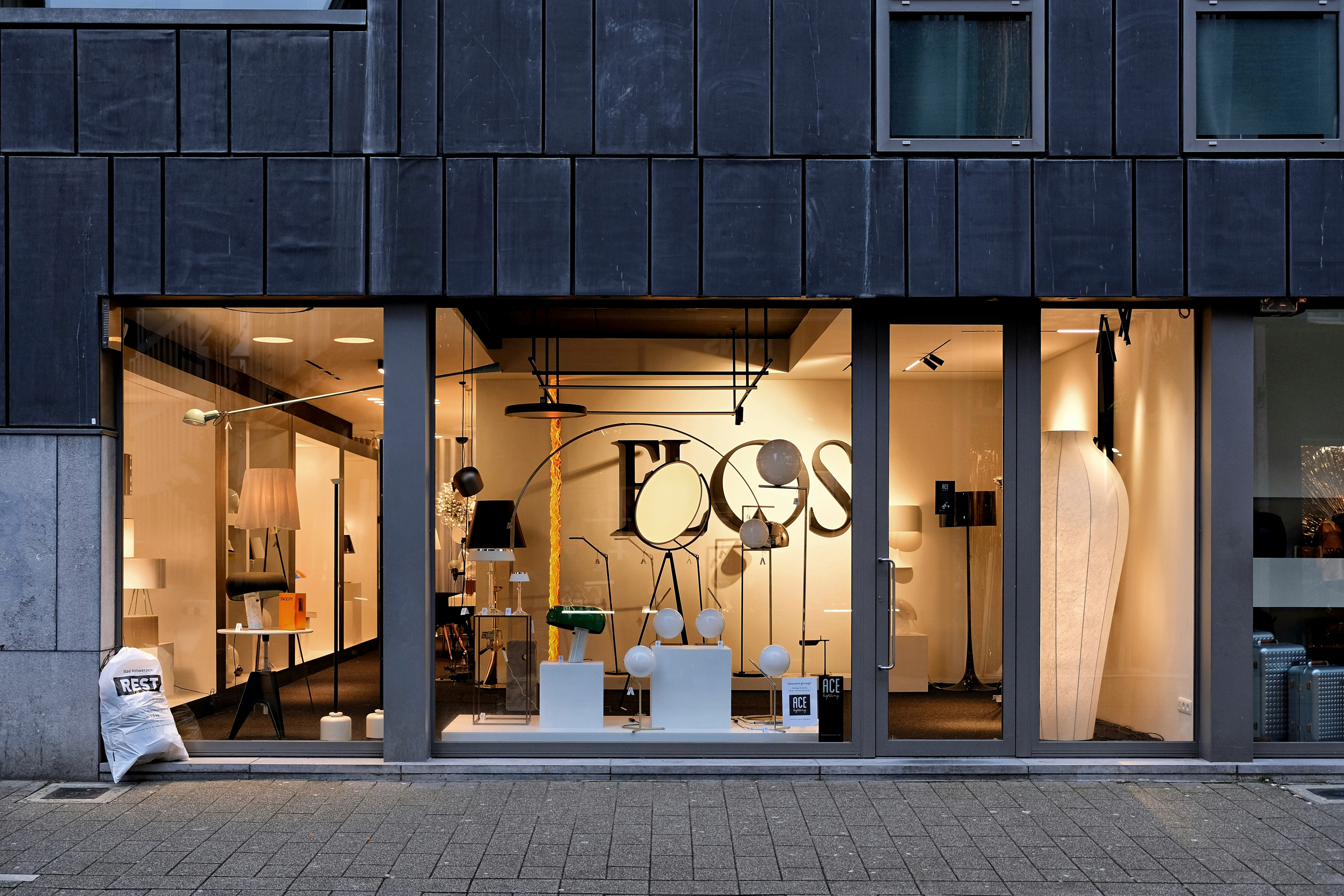
The moment a customer steps toward your store their subconscious begins forming impressions. The landing zone the first five to fifteen feet plays a crucial psychological role. Customers need a few seconds to adjust to the new environment before engaging with products. Dubai luxury retailers often incorporate large glass facades and dramatic front displays because they emotionally pull customers into the shopping experience.
What works at the entrance in Dubai retail spaces:
Open inviting entrances.
Clear visibility of interior merchandise.
Welcoming lighting with warm tones.
High impact displays placed just beyond the decompression zone.
A skilled interior team knows how to design entry zones that reduce hesitation and increase footfall.
2. The Psychology of Dwell Time and Sales
The commercial objective of a luxury retail scheme is to hold attention long enough for consideration to happen. Lighting shapes that directly. Glare over lighting and under lighting all produce visual fatigue and a fatigued shopper leaves. Removing the sources of visual stress is the least visible way to protect dwell time.
3. Colour Temperature and the Speed of Browsing
Lighting can instantly change how customers perceive products and pricing. You can learn more about how colour temperature changes material perception. Different Kelvin values trigger different emotional responses altering how quickly shoppers move through a space.
Psychological impact of specific colour temperatures:
2700K to 3000K warm white. Creates intimacy and slows movement. Used in fine jewellery luxury apparel cosmetics and anywhere a considered purchase is the goal. Flatters warm materials skin and metals.
3500K to 4000K neutral white. Balances warmth against clarity. The default for general retail floors and for merchandise where colour accuracy matters more than mood.
4000K to 5000K cool white. Reads as bright and energising and speeds decisions up. Appropriate for electronics sportswear and fast fashion where visibility is the priority. Rarely correct in a luxury environment.
4. Contrast Ratios Guiding the Shoppers Eye
Accent to ambient contrast is what decides where the eye lands. Working ratios in retail:
2 to 1 perceptible but flat. Not enough to create a focal point.
5 to 1 a distinct focal area. The working minimum for general merchandise you want noticed.
10 to 1 a strong focal accent. Appropriate for hero product and feature displays.
15 to 1 and above dramatic emphasis. Used for jewellery watches and high value display cases where the surrounding circulation is deliberately held down to make the case read as the brightest thing in the room.
These are design working ratios rather than code requirements. The Illuminating Engineering Society RP 2 Recommended Practice for Retail Lighting is the industry reference for these standards.
5. Colour Rendering and Perceived Value
Retail merchandise should be lit by sources with a colour rendering index of Ra 90 or better and colour fidelity should be assessed against ANSI IES TM 30 20 rather than Ra alone since Ra averages eight desaturated samples and hides exactly the failures that matter in retail. Where colour is a selection criterion which covers clothing cosmetics jewellery and any coloured finish Ra 90 with R9 above 50 is the practical floor. Ultimately poor colour rendering makes premium materials look cheaper.
6. Fitting Rooms The Ultimate Decision Zone
The fitting room is where the final purchasing decision is made. If lighting casts harsh shadows across the face or alters the true colour of the garment the sale is instantly lost. Fitting rooms require a highly specific approach:
Source position light from the front and sides at face height not from a downlight directly overhead which casts shadows into the eye sockets and under the jaw.
Vertical illuminance at the mirror plane stated as a target because horizontal lux at floor level tells you nothing about how a person sees themselves.
Colour temperature matched to the sales floor so the garment does not change appearance between the rail and the mirror. A mismatch here is the most common cause of returns.
Ra 90 and R9 above 50 minimum so both the fabric and the skin render honestly. When a customer evaluates a luxury garment in front of a mirror high R9 lighting ensures their skin looks healthy and glowing directly influencing their confidence and their likelihood to purchase.
7. Integrating Local Relevance Through Shadow
Dubai shoppers value immersive experiences. Local detailing is a lighting problem before it is a decorating one. Lattice screens mashrabiya derived panels and perforated metalwork all work by casting shadow which means the fixture position beam angle and source size decide whether the pattern reads as architecture or as visual noise. Grazing light from a shallow angle reveals the depth of the screen. A flat wash from directly in front erases it and the client has paid for a texture nobody can see.
8. The Role of Nakashi AuraSync Complete in Retail Success
Designing a psychology driven retail lighting scheme requires deep technical expertise and flawless execution. AuraSync Complete is an end to end project management service that bridges the gap between behavioral design and technical installation for retail spaces.
The process includes the following structured phases:
Strategic Layout Planning where Nakashi maps the customer journey and determines exact contrast ratios to guide foot traffic.
Fixture Specification ensuring every LED chip meets strict R9 requirements and is specified on performance rather than supplier availability.
Three Dimensional Spatial Simulation utilizing advanced software to conduct a DIALux simulation before construction to model lux levels and shadows before any physical construction begins.
Site Commissioning where Nakashi engineers physically calibrate the control systems dimming panels and beam angles to avoid the rework a late lighting decision causes.
Conclusion Protecting Your Commercial Investment
In the competitive UAE retail landscape the psychology of illumination is a powerful commercial tool. Investing in professional lighting consultancy is a strategic business decision that maximizes dwell time enhances product perception and ultimately drives sales.
Planning a retail fit out or refurbishment in the UAE? Request a lighting strategy review before the ceiling plan is frozen while contrast ratios colour temperature zoning and fitting room specification can still be resolved before the ceiling plan is frozen.
FAQs
How does lighting affect how long customers stay in a store?
Lighting controls visual comfort and visual comfort controls how long someone is willing to stay. Glare from unshielded sources excessive uniformity and over lit ceilings all cause eye fatigue that pushes a shopper toward the exit before they have finished considering a product. Removing those conditions and lighting merchandise rather than floors is what keeps a customer in the space.
Why is colour temperature important in luxury boutiques?
Colour temperature sets the emotional mood. While bright cool light encourages fast transactions warm light around 2700K to 3000K creates a cozy intimate environment that encourages slower browsing and makes customers feel comfortable making high value purchases.
What is a contrast ratio in retail lighting design?
A contrast ratio is the difference in brightness between the general ambient light of the store and the targeted focal light on the merchandise. High contrast ratios draw the customers eye directly to hero products and guide their movement through the space.
Why do luxury stores require high CRI lighting?
A Colour Rendering Index above 90 ensures that fabrics cosmetics and jewelry display their true authentic colours. If a store uses low CRI lighting premium materials will look dull and cheap negatively impacting the customers perception of value.
What does retail lighting consultancy cost in the UAE?
Consultancy is priced against the complexity of the scheme rather than the value of the fixtures because the work sits in zoning specification and commissioning rather than in procurement. A single boutique or multi level flagship requires different scoping. The cost that matters more is the one avoided a retail scheme commissioned after the ceiling is built cannot be fixed without a refit.