Why Poor Lighting Makes Premium Materials Look Cheaper | Nakashi
Learn why poor lighting can make premium materials look cheaper in luxury interiors, and how lighting consultancy helps protect marble, wood, metal, glass, fabrics, and finishes across UAE projects.
Jul 28, 2026
Why Poor Lighting Makes Premium Materials Look Cheaper
Premium interiors are built on material quality. Architects, developers, and design teams spend significant time selecting marble slabs, timber veneers, metal details, textured walls, glass features, fabrics, paint finishes, stone surfaces, and custom joinery because every material contributes to the final experience of the space.
But no material is experienced on its own. Every finish is seen through light.
A marble wall may be expensive, but if it is hit by uncontrolled glare, it can look harsh and uncomfortable. A timber surface may be carefully selected, but if it is lit with the wrong colour temperature, it can appear flat or overly yellow. A brass detail may be refined, but if the beam angle is wrong, it can look shiny, patchy, or visually loud.
This is why poor lighting can make premium materials look cheaper than they really are.
In luxury interiors across Dubai and the UAE, where high end residential, hospitality, retail, and commercial spaces often depend on premium finishes, lighting design must be considered as part of the material strategy from the beginning.
Materials Do Not Fail Alone
When a finished space does not look as refined as expected, the immediate assumption is often that the material selection was wrong. In many cases, the material is not the real issue. The lighting is.
Materials change depending on the light that reaches them. Direction, colour temperature, intensity, beam spread, glare, and colour rendering all affect how a finish appears in real life. This is why a sample that looks beautiful in a showroom can feel completely different once installed inside a project.
Poor lighting can make luxury materials look cheaper by flattening texture, exaggerating reflections, distorting colour, creating hotspots, or making surfaces feel visually inconsistent. A good lighting consultant understands that the role of lighting is not only to illuminate the room, but to reveal the material palette correctly.
Mistake 1: Using the Wrong Colour Temperature
Colour temperature has one of the strongest effects on material perception.
Warm light can make wood, leather, bronze, textured fabrics, and beige stone feel rich and inviting. Cooler light can support clean contemporary interiors, white surfaces, and some minimalist palettes, but it can also make warm materials look cold, washed out, or clinical.
The problem occurs when one generic colour temperature is applied across an entire project without considering the material palette. A villa with warm timber, natural stone, bronze details, and soft fabrics should not be treated the same way as a modern retail space built around glass, white surfaces, and stainless steel.
A lighting specification consultant evaluates how each finish responds to colour temperature before fixtures are finalised. This helps ensure that the approved material palette looks consistent once installed.
Mistake 2: Ignoring Colour Rendering
Colour temperature is important, but it is not the full story. Colour rendering determines how accurately a light source reveals the colours of materials.
A fixture can have the right warmth but still make materials look dull if its colour rendering quality is poor. This matters in luxury interiors because subtle tones are part of the design value. Marble veining, wood grain, fabric depth, artwork, leather, stone, and decorative finishes all depend on accurate colour perception.
Poor colour rendering can make expensive finishes look muted or inconsistent. It can also create a gap between what the client approved during material selection and what they see after installation.
High quality lighting helps preserve the true character of the material. This is why fixture specification should be based on performance, not simply appearance or cost.
Mistake 3: Creating Glare on Reflective Surfaces
Glare is one of the fastest ways to reduce the perceived quality of a premium interior.
Many luxury materials are reflective. Polished marble, glass, mirrors, lacquered panels, metal trims, glossy stone, and decorative finishes can all reflect light directly into the viewer’s eye if fixtures are poorly placed.
The material may be expensive, but the experience becomes uncomfortable. Instead of noticing the beauty of the finish, the eye notices the glare.
Glare control lighting design is especially important in Dubai and the wider UAE because strong natural daylight already creates high contrast conditions. Artificial lighting must be carefully planned so reflective materials remain elegant and comfortable at all times of day.
A lighting consultant studies beam angles, viewing direction, fixture shielding, recess depth, surface reflectance, and user movement to prevent glare before it becomes a site problem.
Mistake 4: Flattening Texture With Uniform Lighting
Premium materials often rely on texture.
Textured stone, timber grain, plaster finishes, fabric wall panels, leather, brushed metal, fluted glass, and decorative surfaces all need shadow and contrast to show depth. If the lighting is too uniform, the texture disappears.
This makes the material look flatter and less expensive than it is.
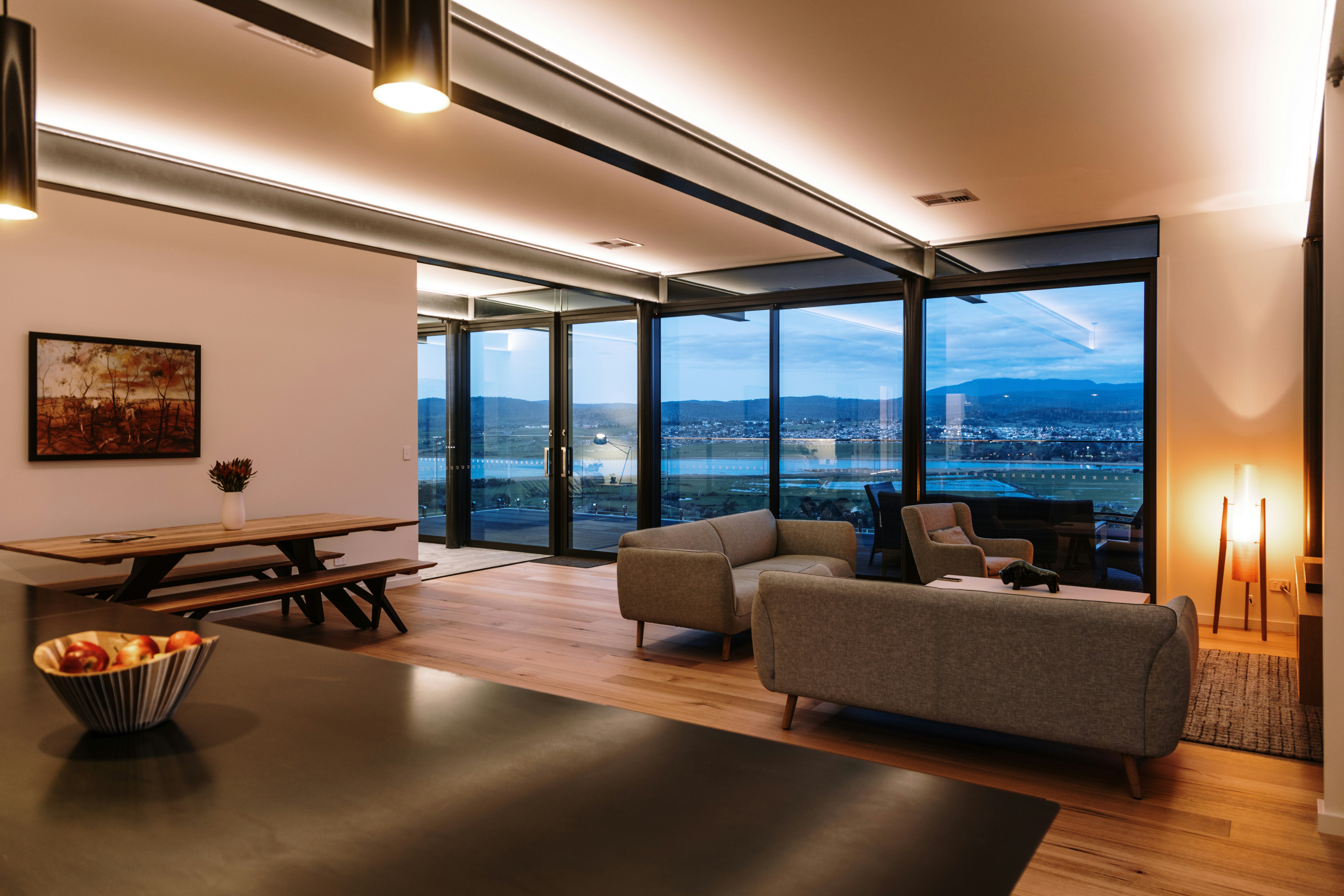
Luxury lighting should create controlled contrast. It should reveal depth without creating harsh shadows. Wall grazing, accent lighting, cove lighting, and carefully planned beam angles can help materials show their natural character.
When lighting is planned too generally, the interior loses its layers. The result may be bright, but it does not feel premium.
Mistake 5: Overlighting Premium Interiors
Many luxury interiors are damaged by too much light.
Overlighting removes intimacy, depth, and visual hierarchy. It can make a private residence feel like a showroom, a restaurant feel flat, or a hotel lobby feel less atmospheric.
Premium materials usually need selective emphasis, not equal brightness everywhere. Marble may need soft grazing light. Artwork may need focused accent lighting. Timber may need warmth. Metal may need controlled highlights. Fabric may need softness. Glass may need glare management.
When every surface is lit with the same intensity, the interior becomes visually tiring. The materials no longer feel curated. They feel exposed.
A structured lighting design process prevents this by defining what should be highlighted, what should remain subtle, and how the eye should move through the space.
Mistake 6: Poor Beam Angle Planning
Beam angle controls how light lands on a surface.
A narrow beam can create drama and focus, but in the wrong place it can create hotspots. A wide beam can create softness, but if used incorrectly it can make a feature wall feel flat. Incorrect beam placement can miss the material entirely or illuminate it from an unflattering angle.
This is especially important for vertical surfaces, artwork, stone walls, textured finishes, and display areas. If the beam angle is wrong, the finish may not show its depth or detail.
Lighting consultants use beam angle planning to ensure that light reaches the right surface in the right way. This protects the visual quality of the material and reduces the need for corrections during installation.
Mistake 7: Planning Lighting After Materials Are Finalised
Lighting should not be planned after the material palette is already locked and the ceiling design is finalised.
By that stage, many important decisions have already been made. Ceiling positions may be fixed. Joinery details may be approved. Wall finishes may be selected. MEP layouts may already be coordinated. This limits the ability to adjust lighting around the materials.
If lighting is introduced late, project teams may discover that the ideal fixture position conflicts with a duct, speaker, sprinkler, access panel, ceiling detail, or joinery structure. The result is compromise.
Industry research commonly places the cost impact of late design changes within a range of 5 to 15 percent, especially when completed ceilings, electrical provisions, or fixture specifications need to be adjusted.
Early lighting consultancy helps avoid this by reviewing materials, surfaces, ceilings, and technical systems together before decisions become difficult to change.
Mistake 8: Weak Joinery Lighting Coordination
Joinery is often one of the most visible parts of a luxury interior.
Wardrobes, shelving, display units, TV walls, bars, kitchens, vanities, wall panels, and feature storage all depend on careful lighting integration. If lighting is not coordinated with joinery details, the result can immediately reduce perceived quality.
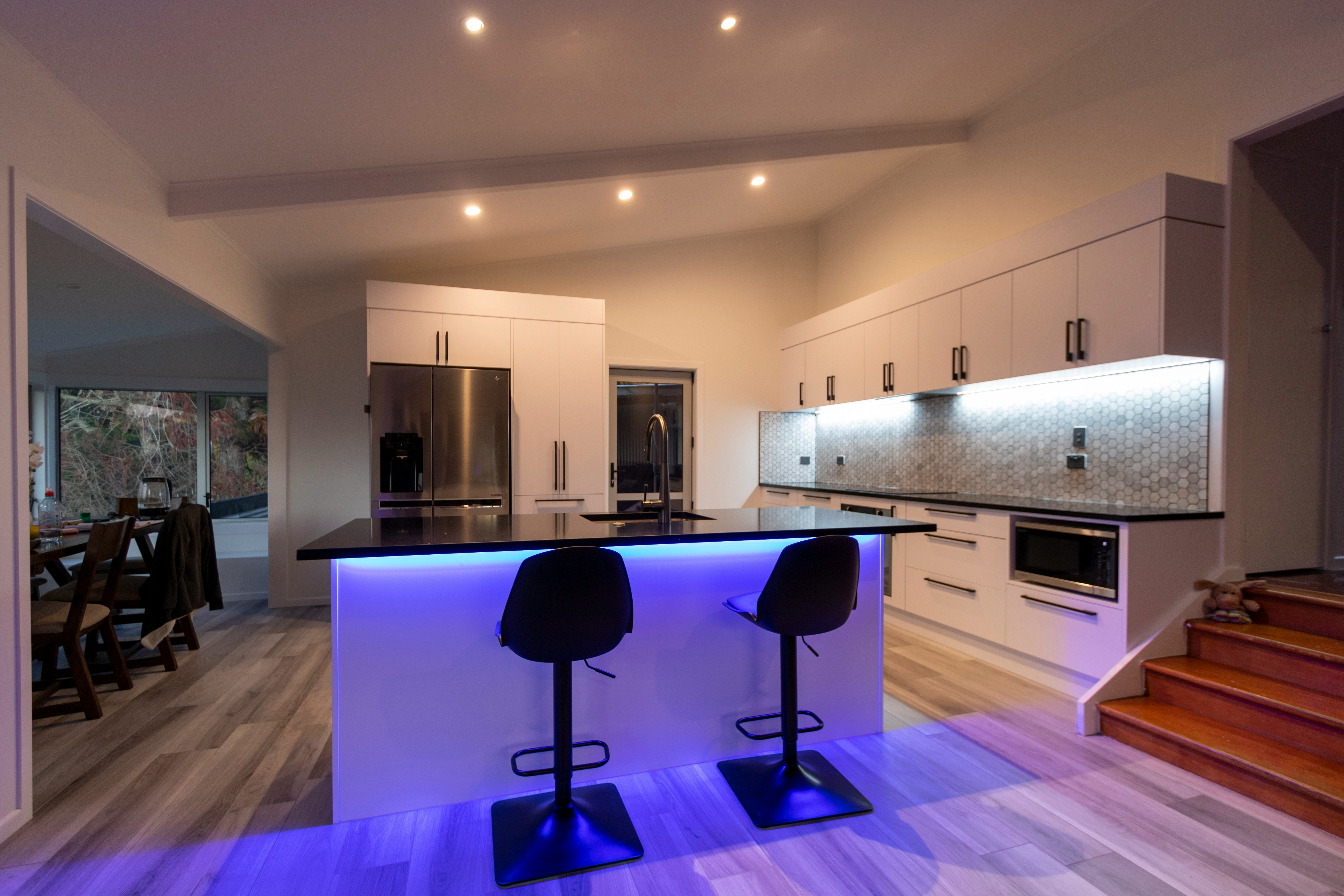
Visible LED dots, uneven lines, shadow gaps, inaccessible drivers, poorly concealed wiring, and inconsistent colour all make premium joinery look less refined.
Good joinery lighting requires early coordination between the lighting consultant, architect, interior team, joinery contractor, MEP engineer, and installer. The lighting must be designed into the detail, not added after the detail is complete.
Mistake 9: Ignoring Daylight Conditions in UAE Interiors
Lighting design in the UAE must respond to strong natural daylight.
Large windows, glazed facades, reflective floors, bright external conditions, and high ambient brightness create strong transitions between day and night. A material that looks balanced during daylight may feel different under evening artificial lighting.
This makes lighting control, glare management, and scene planning especially important in Dubai luxury interiors.
Artificial lighting should not fight daylight. It should complement it. A professional lighting design considers how the space changes throughout the day, how materials behave under different light conditions, and how evening scenes restore warmth, depth, and comfort.
Mistake 10: Selecting Fixtures Without Performance Validation
In many projects, fixtures are selected based on catalogue images, brand preference, or visual appearance.
This can be risky because fixtures that look similar can perform very differently. Beam quality, glare rating, colour rendering, dimming behaviour, thermal performance, installation detail, and driver compatibility all affect the final result.
A premium finish needs lighting that performs accurately. If the fixture is poorly specified, the material may never look as intended.
Tools such as DIALux and Relux allow lighting consultants to test lux levels, beam spread, spatial balance, and surface illumination before installation. This validation helps architects and developers make lighting decisions based on performance rather than assumption.
Why This Matters for Architects and Developers
For architects, materials are part of the design language. Poor lighting can weaken that language by making carefully chosen finishes appear less refined than intended.
For developers, materials represent investment. Stone, timber, metalwork, glass, custom joinery, and premium finishes carry significant cost. If lighting makes those materials look cheaper, the perceived value of the entire project suffers.
For project teams in Dubai and across the UAE, the stakes are especially high because clients often benchmark interiors against international luxury hospitality, retail, and residential standards.
Compliance requirements from utility authorities such as DEWA in Dubai, alongside sustainability frameworks like LEED and Estidama, also require lighting performance and energy strategy to be planned early. Lighting can account for 15 to 20 percent of a commercial building’s electricity use, making it a meaningful component of energy strategy and sustainability compliance.
Lighting is not only a visual decision. It affects comfort, performance, energy use, coordination, and perceived project value.
Nakashi’s AuraSync Approach to Material Sensitive Lighting
Nakashi approaches lighting as an architectural discipline rather than a product decision.
Developed through more than 14 years of lighting industry experience across the UAE, the AuraSync framework helps architects, developers, and project teams coordinate lighting with materials, interiors, and technical systems before the project reaches site.
AuraSync is structured around different levels of project involvement.
Refine supports projects that already have a lighting layout but require technical validation before installation. This helps review glare, beam angles, lux levels, driver placement, and specification alignment before work reaches site.
Studio supports projects during the design stage, where lighting hierarchy, ambience, material response, joinery lighting, simulations, and documentation still need to be developed. This is often the ideal stage for projects where premium materials are central to the design outcome.
Complete supports projects requiring end to end lighting consultancy from early concept through technical coordination, construction support, scene setting, and final commissioning. This level is suitable for projects where lighting, materials, automation, and final ambience must be protected across every stage.
Consultancy fees are scoped per project based on scale, complexity, and depth of involvement, allowing project teams to plan lighting investment early in the design phase.
This structured approach ensures that lighting is planned around the material palette, validated technically, coordinated across disciplines, and protected throughout the project lifecycle.
Final Thoughts
Premium materials do not automatically create a premium space.
They need the right lighting to reveal their quality.
Poor lighting can make marble look harsh, wood look dull, metal look cheap, glass look uncomfortable, fabrics look flat, and joinery look unfinished. The issue is not always the material. Often, it is how the material is lit.
For luxury interiors in Dubai and across the UAE, lighting consultancy protects the material investment by ensuring finishes are seen exactly as intended.
When lighting is planned early, validated technically, and coordinated with the material palette, premium interiors feel refined, balanced, and complete.
Ready to Protect the Value of Your Premium Materials
Nakashi’s AuraSync lighting consultancy supports architects, developers, and project teams through a structured lighting design process that protects material quality, ambience, and design intent.
Explore AuraSync or contact the Nakashi team to discuss your project.
FAQs
Why does poor lighting make premium materials look cheaper
Poor lighting can distort colour, flatten texture, create glare, and reduce the visual depth of premium materials. Even expensive finishes can look less refined if colour temperature, beam angle, glare control, and fixture quality are not planned correctly.
What materials are most affected by poor lighting
Reflective and textured materials are especially affected. Marble, glass, metal, polished stone, wood, fabrics, textured plaster, and custom joinery all require careful lighting design to appear as intended.
How can lighting improve the appearance of premium materials
Lighting improves materials by using the right colour temperature, colour rendering, beam angle, glare control, and lighting hierarchy. This helps finishes show their natural colour, texture, depth, and quality.
How much does lighting consultancy cost in UAE
Lighting consultancy fees are scoped per project based on scale, complexity, and depth of involvement. Costs are typically discussed during initial project consultations to ensure alignment with project scope.